



Most people don’t stop using beauty products because they expire. They stop when they finish.
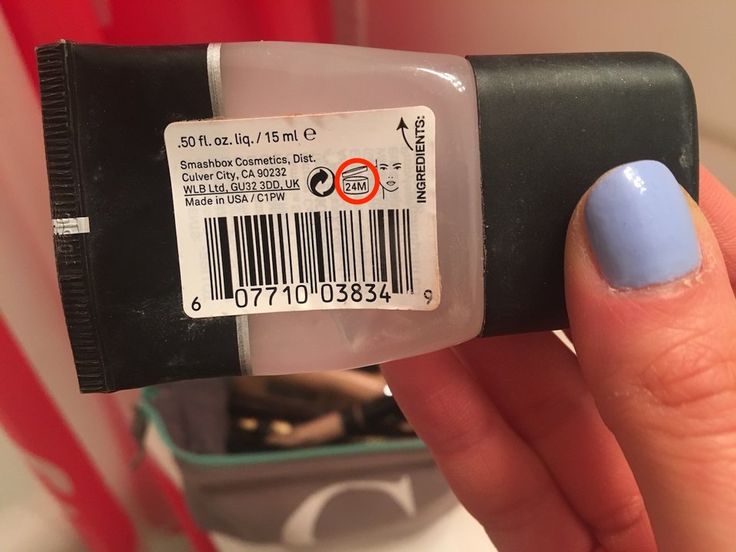
In practice, expiry dates often function more like suggestions than rules, but in skincare science, especially for sunscreen and products applied near the eyes and mouth, expiry is not cosmetic, it is chemical and biological degradation.
Expired Makeup and Sunscreen: When Products Age, Chemistry Changes
Cosmetics are not static substances, they are emulsions, preservatives, active compounds, and stabilisers designed to remain balanced for a limited time.
That is why once a product is opened, oxygen, heat, humidity, and repeated contact with skin and fingers begin to alter that balance.
In makeup, this means preservatives slowly lose effectiveness.
As this barrier weakens, microbial growth becomes more likely, even when the product still looks normal.
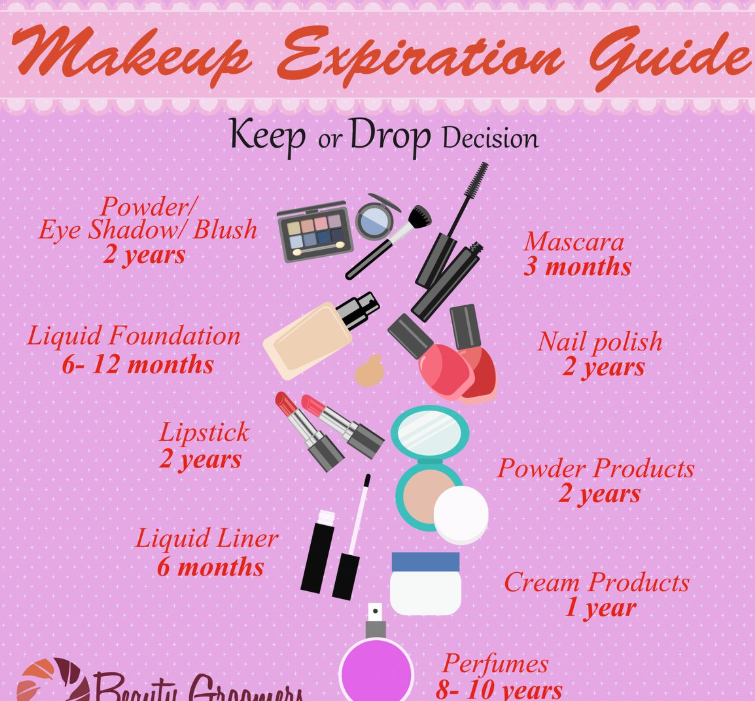
Liquid products (foundation, concealer, cream blush) are especially vulnerable because they contain water, which allows bacteria to survive and multiply.
Eye products (mascara, eyeliner) are among the highest-risk items due to repeated contact with mucous membranes. This increases the likelihood of irritation and infections.
Lip products sit at the intersection of skin and ingestion, making contamination less visible but still relevant.
The danger is that spoilage in cosmetics is often invisible, and most people depend on texture, smell, or colour changes, to throw away the products while these are late indicators.
Sunscreen Is Not Skincare, It Is a Time-Sensitive Medical Barrier
Unlike makeup, sunscreen is a functional protective product.
Its role is to absorb, scatter, or block ultraviolet radiation through active chemical or mineral filters. These active ingredients in them, degrade over time, particularly when exposed to heat or sunlight. Once that happens:
The SPF level may no longer match what is written on the bottle, so it might be ineffective and the UVA protection (linked to skin ageing and deeper damage) can weaken. Many users may experience sunburn despite “proper application” of the expired sunscreen due to a false sense of protection which has the most dangerous effect.
The skin is still exposed, but the user believes it is not.
Why Expired Products Stay In Circulation And Makeup Bags
The continued use of expired beauty products is rarely about negligence. It is structural and behavioural:
- Products are expensive and replaced slowly
- Expiry dates are not always checked or understood
- Packaging rarely communicates risk in accessible language
- There is normalisation of “it still works fine”
- In many cases, consumers are making rational decisions within financial and informational constraints.
While often framed as personal care, expired cosmetics sit quietly within a wider public health space. Eye infections, skin irritation, contact dermatitis, and UV damage are not isolated cosmetic issues, they are preventable health outcomes linked to product safety and awareness.
Yet regulation and consumer education around cosmetic expiry remain minimal compared to food or pharmaceuticals, leaving most users to self-navigate risk.
Expired makeup doesn’t always fail visibly, it fails chemically. Expired sunscreen doesn’t always look different; it may appear normal, but it loses effectiveness silently.
In both cases, the risk is not immediate, but accumulative, and often only becomes visible after damage has already occurred.
This hidden risk also extends to application tools. Makeup brushes and sponges can easily accumulate bacteria, oil, dead skin cells, and product residue. If not cleaned regularly, they become a direct pathway for skin infections, including bacterial or viral infections that can lead to irritation, breakouts, or more serious skin conditions.
For this reason, tools used on the face should be cleaned frequently, ideally every few days, with many experts recommending at least every 2–3 days for sponges and regularly for brushes depending on use.
Effects of Expired makeup: Watch here
Read more stories: HERE