


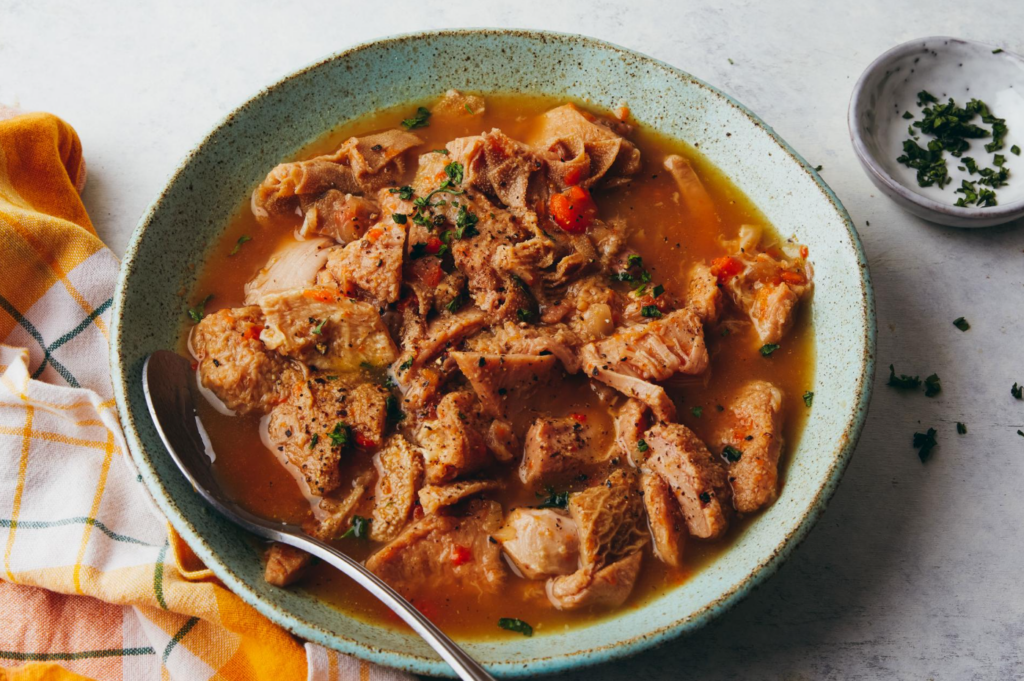

What is Tripe (Matumbo)?
Tripe is the edible lining of the stomach of ruminant animals, most commonly cattle, calves, and sheep.
More specifically, it refers to the four chambers of a ruminant’s stomach, which work together to digest plant material through a complex process of fermentation and regurgitation.
The four stomach chambers, the rumen, reticulum, omasum, and abomasum, each produce a distinct type of tripe with its own texture, appearance, and flavour. The rumen, the largest chamber, stores food after it is swallowed.
The food is later regurgitated and chewed again as cud before passing through the honeycomb-like reticulum, the omasum, and finally the abomasum, often referred to as the “true stomach.”
Before consumption, tripe must be thoroughly cleaned and scrubbed to make it edible. The history of tripe stretches back thousands of years. Archaeological and historical records suggest that ancient civilizations, including the Romans, consumed tripe as part of a practical approach to food utilization.
While tripe became an important source of nutrition for working-class populations across Europe because it was affordable, widely available, and rich in protein and essential nutrients, its consumption was by no means limited to Europe.
Who ate the Tripe?
As a result, tripe’s global story is not solely one of poverty or working-class survival.
Rather, it is a story of resourcefulness, sustainability, and culinary ingenuity that emerged independently across different civilizations and cultures around the world.
Over time, different cultures developed their own signature tripe dishes. In France, the Normandy specialty tripes à la mode de Caen combines the four types of tripe, slowly simmered for up to ten hours with calf’s foot, onions, and carrots.
In Spain, callos a la madrileña features tripe stewed with spicy chorizo and morcilla sausage. Mexico’s famous menudo incorporates tripe into a richly spiced broth flavoured with chili peppers, while in England, honeycomb tripe served with onions and white sauce was once considered a staple meal among working-class communities.
Despite these regional differences, tripe dishes share common characteristics: Long, slow cooking methods that transform the ingredient into a rich, gelatinous, and deeply flavourful meal.
How Tripe Came to Kenya
The consumption of tripe in Kenya is rooted in the country’s long-standing pastoral traditions. For centuries, cattle have played a central role in the economic, cultural, and social life of many Kenyan communities, including the Maasai, Samburu, Borana, Kalenjin, and several other pastoral and agro-pastoral groups.
Traditionally, when livestock were slaughtered for ceremonies, family gatherings, or community events, every edible part of the animal was utilized.
This practice mirrored similar “nose-to-tail” traditions found elsewhere in the world.
Tripe, along with other organ meats, became valued not only because it reduced waste but also because it provided an affordable and nutritious source of food.
The spread of urbanization and the growth of butcheries, hotels, and roadside eateries in the twentieth century helped popularize matumbo beyond pastoral communities.
What was once considered a humble meal gradually became a beloved national dish enjoyed by people from diverse ethnic and economic backgrounds.
Today, matumbo is found in homes, restaurants, and street-food establishments across Kenya.
Whether prepared in a traditional stew with onions and tomatoes or incorporated into modern culinary creations, it remains a powerful symbol of Kenyan food culture and a reminder of the country’s heritage of resourcefulness and communal dining.
Its story mirrors that of countless cultures around the world: a simple ingredient transformed through tradition, creativity, and shared experience into a dish that continues to unite people across generations and continents.