




Sometimes, the biggest cultural shifts don’t come with announcements.
They don’t trend instantly or arrive with hype. They slip in quietly, through a playlist, a long drive, a moment you weren’t even paying attention to.
- About the Artist: Nitefreak
- Nitefreak music that speaks to all souls
- 1.Kamili
- 2.“Gorah” and the weight of silence
- 3. Mulalo: The Ancestral Anthem of Peace
- Why his music feels Kenyan, even when it’s not entirely
- Uniquely manicured
- Premier Gaou goes platinum in France
- Different countries. Different histories.
That is how I found Nitefreak.
It was December 2025, somewhere between Nairobi and Nanyuki. Spotify was on shuffle, the kind you don’t overthink just background music for the road.
No expectation, no searching. Just sound filling the silence between conversations.
At the time, the name was irrelevant. I didn’t care about his origin, and I didn’t even stop to check the track titles. But there was something in the pulse of the music, a subtle, magnetic energy that was impossible to ignore.
Even though these tracks were released at different times, they possessed a rare, cohesive DNA. They didn’t just play; they flowed into one another, creating a singular narrative that stayed with me long after the drive ended.
Weeks later and now in March 2026, I realised I had been going back to the same sound over and over again. Different days, different moods, same feeling.
That’s when it clicked.
This wasn’t just good music.
It was something you don’t skip. Something you carry with you long after the song ends.
About the Artist: Nitefreak
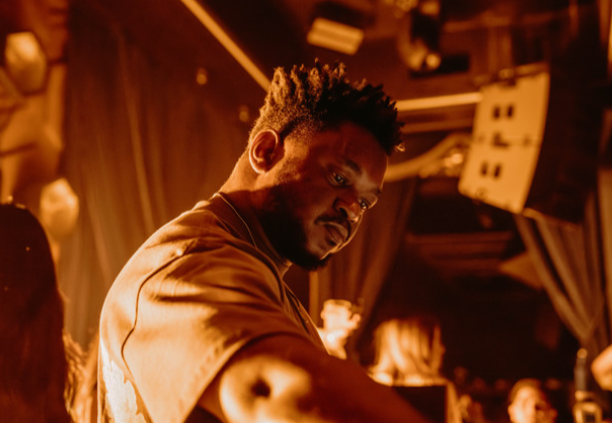
Nitefreak, born Bhekinkosi Mabhena in 21 September 1991 (age 34 years ) in Bulawayo, Zimbabwe, is a self-taught DJ and producer who has become a leading figure in Afro-progressive house. He did not study music formally; instead, he learned by experimenting with beats, synthesizers, and digital audio software from a young age, guided by a passion for African rhythms and electronic innovation.
His interest in Afro-progressive house stems from a desire to preserve and celebrate African languages and cultural stories while making them accessible on global dancefloors.
Since 2009, he has blended traditional African musical elements with modern electronic production, producing tracks like Kamili, Gorah, Hinde, and Maithori, which turn deeply personal and regional narratives into international club anthems. Through collaborations across Africa, Europe, and beyond, Nitefreak has become a cultural curator, connecting local heritage with global audiences.
Nitefreak music that speaks to all souls
1.Kamili
I felt it, his music spoke to me. The first real shift came with “Kamili.”
At first, it’s easy to let it play in the background. It is smooth, emotional and some sort of familiar maybe because some of the words used are Swahili and the beats are hyped.
But once you learn the story behind it, the “hype” has a purpose.
A collaboration with Francis Mercier and Kenya’s own Idd Aziz, the song which is sung in Mijikenda is about a brother who disappeared for over 20 years!
“Kamili ma nzooh… Udze mudzini dede”
(Kamili my brother… come back home)
That’s when it stops being just a song.
It becomes a message. A memory. A wound.
While ‘Kamili’ is a literal search for a lost sibling, it has transformed into a spiritual anthem for the diaspora.
It challenges the listener: In the pursuit of global success, have you lost yourself?
The song is a rhythmic compass pointing back home
To listen to Kamili is to be reminded that you cannot be ‘complete’ (Kamili) until you acknowledge where you came from.
And somehow, that deeply personal story is now playing in clubs across the world.
2.“Gorah” and the weight of silence
While “Kamili” is the compass pointing you home, “Gorah” is the song that asks how you are surviving the journey.
Released in late 2023 on Diplo’s Higher Ground label, this track is a massive collaboration between Nitefreak and the South Sudanese legend Emmanuel Jal.
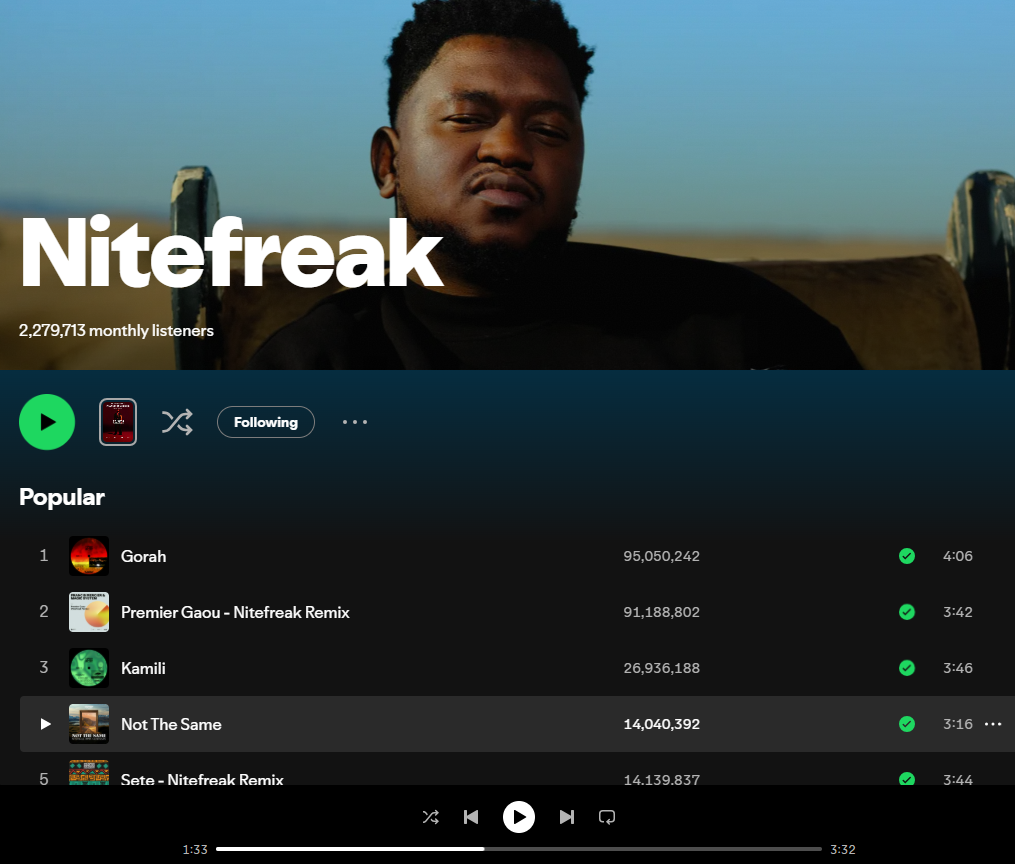
It currently sits at the very top of Nitefreak’s discography with over 93.7 million streams on Spotify, making it his most-listened-to track to date.
The story behind “Gorah”
The track began when Nitefreak sent a beat to Jal, an artist he had looked up to for years as a pioneer of the Afro-house sound. Jal, a former child soldier turned peace activist, recorded the vocals right here in Kenya.
The Language: Nuer (Thok Naath), spoken primarily in South Sudan and Western Ethiopia.
The Meaning: In Nuer, “Gorah” refers to “pressure” or the “struggles” of daily life.
Jal wrote the lyrics during a period of intense global crisis. Jal noticed that in the wake of the pandemic and rising global inflation, people became hyper-focused on their own business and survival. He observed a shift where we stopped caring for the community and instead “only worry about ourselves.”
“Jaal one themselves / Every one themselves” > — Lyrics from Gorah reflecting this isolation.
He felt that people had become so isolated and self-absorbed that they stopped checking on one another. He also called out the “crisis” of silence, we have all the technology in the world, yet we use it less to connect deeply.
The song is a series of questions:
“How is it going?” (We edian?)
“How are you handling the current pressure?”
“How are you coping?”
Nitefreak’s production is “Afro-progressive”, so it takes the raw, emotional weight of Jal’s Nuer vocals and wraps them in a driving, melodic house rhythm.
It’s a track designed to make you dance, but if you understand the words, it’s actually a deeply empathetic conversation between two people.
3. Mulalo: The Ancestral Anthem of Peace
If “Kamili” is about home and “Gorah” is about surviving the pressure of the journey, “Mulalo” is the spiritual destination.
Released in August 2025, this track has quickly become a standout in the global Afro-house scene, marking a powerful collaboration between Nitefreak, Moroccan producer Choujaa, and South African vocalist Mavhungu.
The Meaning: A Universal Prayer
The word “Mulalo” translates directly to “Peace” in Tshivenda (Venda), a language spoken in the northern regions of South Africa and parts of Zimbabwe.
The Soul of the Song: Mavhungu’s stirring vocal chant isn’t just a hook; it’s a prayer for tranquility. It represents the quiet moment after the struggle, the “ancestral energy” that grounds the listener. By blending Venda vocals with a Moroccan-influenced production, Nitefreak has created a “Pan-African” anthem.
It proves that the feeling of peace is a universal language, whether you are listening in Nairobi, Casablanca, or Johannesburg.
Why his music feels Kenyan, even when it’s not entirely
At some point, I realized why Nitefreak’s music felt so familiar, so close. It wasn’t just the Afro-house beats; it was the language and meaning woven into the songs.
- Maithori carries Kikuyu vocals, raw and emotional, conveying feelings of joy, pain, and memory that resonate even if you don’t understand every word.
- Hinde comes from Rabai, meaning “let’s go”, a phrase that on the surface is simple, but in the song it becomes a call to action, progress, and unity.
- Kamili tells stories in Mijikenda, the coastal language of Kenya, turning personal and communal experiences, like loss, hope, and longing, into music that speaks across borders.
These are not just stylistic touches or layered effects. They are real cultural fragments with deep meaning and every word carries history, emotion, or a story, even if listeners outside the region don’t understand the language.
Nitefreak blends them seamlessly with international sounds, creating tracks that are globally accessible yet deeply African.
It’s proof that music isn’t just about beats or melodies, it’s about storytelling, memory, and connection. The languages used, the phrases, the emotions, they all matter, and they make his music feel like home, no matter where you are.
Uniquely manicured
All of Nitefreak’s songs feel like a journey, a movement, a transition that leaves something behind as you step into something new. Take Maithori, for example, sung in Kikuyu and meaning “tears.” The track joins the work of artists like Sophia Nzau, who are bringing Kikuyu, a language rarely heard in global electronic music, onto international playlists, giving it a place where it resonates far beyond its roots.
It makes you think:
How many stories have we had all along… that just needed the right platform?
And then the world caught on.
Premier Gaou goes platinum in France
By the time Premier Gaou went platinum in France, it was clear this wasn’t a moment for Nitefreak it was a movement.
A remix of an Ivorian classic, sung in Nouchi and French, carrying a story about heartbreak and growth… now reaching audiences far removed from where it started.
Same with Sete, pulling from Mali’s Bambara language.
Different countries. Different histories.
What’s really happening here? Nitefreak isn’t just making music, he’s connecting dots most people didn’t even realize were separate.
Zimbabwe. Kenya. South Sudan. Mali. Côte d’Ivoire. South Africa (Africa) to the Outside…UK, Sweden…French.
These are areas with different languages, different stories, but somehow, they sit together in one sound.
And maybe that’s why it works. Because it doesn’t feel forced, it feels familiar.
Right now, this is the rotation.
Masterclass(Popular here in Kenya)
Premier Gaou
Gorah
Mulalo
Kamili
Maithori
Hinde
Not the Same
Wherever You Are
And honestly… I’m still not tired of it.
For a long time, a lot of African stories stayed where they started. In villages, in homes, in languages people said wouldn’t “travel.” but his music proves they can.
Not by changing them, but by carrying them as they are. I didn’t go looking for Nitefreak.
But somehow, through a random playlist and a road trip, I found music that felt like home, even when it came from somewhere else. And maybe that’s what makes it powerful.
Listen to his music: Spotify
Follow him in Instagram: NITEFREAK
More Entertainment stories: HERE